Take your digital marketing to the next level with data-driven strategies and innovative solutions. Let’s create something amazing together!
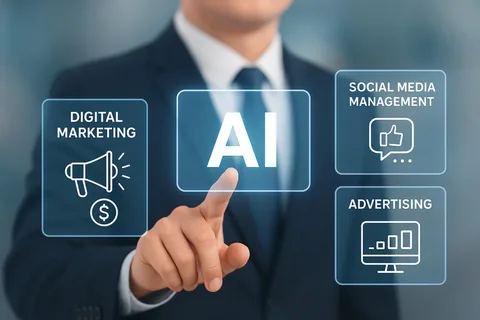
Marketing has changed more in the last few years than it did in the previous two decades combined, and artificial intelligence is the biggest reason why. From writing ad copy to predicting customer behavior, AI-powered marketing automation tools are helping businesses of every size do more with less, less time, less budget, and less guesswork.
At Technivore, based in Lahore, Pakistan, we work with businesses every day that are trying to figure out which tools are actually worth adopting and which ones are just hype. The truth is, AI marketing automation isn’t a trend anymore, it’s quickly becoming the standard for businesses that want to stay competitive, whether you’re a local Lahore-based shop or a growing company targeting international markets.
In this guide, we’re breaking down the most important categories of AI marketing automation tools every business should know about, what they do, and how to choose the right ones for your goals.
Before diving into specific tools, it’s worth understanding why this shift matters so much. Traditional marketing required teams to manually manage campaigns, analyze data, write content, and test strategies, all of which took significant time and resources. AI automation changes that equation entirely.
It saves time. Tasks that used to take hours, like writing email copy or analyzing campaign performance, can now be done in minutes.
It improves accuracy. AI tools can process massive amounts of customer data to make smarter, more informed decisions than manual analysis alone.
It scales personalization. AI makes it possible to deliver personalized experiences to thousands of customers at once, something that simply wasn’t feasible manually.
It reduces costs. Automating repetitive tasks means smaller teams can accomplish more without needing to hire additional staff.
For businesses in Lahore and across Pakistan looking to compete with larger, better-funded competitors, AI marketing automation is one of the most effective ways to level the playing field.
Content creation used to be one of the most time-consuming parts of any marketing strategy. AI-powered content tools can now generate blog posts, social media captions, ad copy, and email content in a fraction of the time it would take a human writer to draft from scratch.
What they’re used for: Generating first drafts of blogs, product descriptions, social captions, and ad variations.
Why businesses need them: Consistent content output is essential for SEO and audience engagement, but manually producing content at scale is expensive and time-intensive. AI content tools help businesses maintain a steady publishing schedule without overwhelming their teams.
What to look for: Tools that allow brand voice customization, support multiple content formats, and integrate with your existing content workflow.
Email remains one of the highest-ROI marketing channels, and AI has made it significantly smarter. Modern email automation tools can analyze subscriber behavior, predict the best send times, and even generate subject lines and body copy optimized for open and click-through rates.
What they’re used for: Automated drip campaigns, personalized product recommendations, send-time optimization, and subject line testing.
Why businesses need them: AI-driven email automation increases engagement rates while reducing the manual work of segmenting lists and writing individual campaigns.
What to look for: Behavioral trigger automation, A/B testing capabilities, and integration with your CRM or e-commerce platform.
AI chatbots have evolved dramatically, from simple rule-based scripts to sophisticated conversational tools that can answer questions, qualify leads, and even complete transactions.
What they’re used for: Website customer support, lead qualification, appointment booking, and answering frequently asked questions in real time.
Why businesses need them: Customers expect instant responses, and chatbots provide 24/7 engagement without requiring a full-time support team.
What to look for: Natural language processing capabilities, easy integration with your website or social media platforms, and the ability to hand off complex queries to a human when needed.
Search engine optimization has become significantly more sophisticated, and AI tools now play a major role in keyword research, content optimization, and competitive analysis.
What they’re used for: Identifying high-value keywords, analyzing competitor content strategies, optimizing on-page content, and tracking ranking performance.
Why businesses need them: SEO is essential for long-term organic visibility, and AI tools help businesses identify opportunities faster and optimize content more effectively than manual research alone.
What to look for: Keyword difficulty scoring, content optimization recommendations, and integration with analytics platforms.
AI-powered analytics tools can process massive datasets to identify patterns in customer behavior, predict future purchasing decisions, and flag customers at risk of churning.
What they’re used for: Forecasting sales trends, identifying high-value customer segments, and predicting which customers are likely to convert or churn.
Why businesses need them: Understanding customer behavior at this level allows businesses to make proactive marketing decisions instead of reactive ones.
What to look for: Clear, actionable dashboards and integration with your existing customer data platforms.
Managing social media across multiple platforms is time-consuming, and AI tools now help automate scheduling, caption generation, hashtag research, and even performance analysis.
What they’re used for: Content scheduling, caption and hashtag suggestions, optimal posting time recommendations, and engagement analytics.
Why businesses need them: Consistent social media presence is critical for brand visibility, and AI automation makes it possible to maintain that consistency without a full-time social media team.
What to look for: Multi-platform scheduling, analytics reporting, and content suggestion features tailored to your industry.
Paid advertising platforms increasingly rely on AI to automatically optimize ad targeting, bidding, and creative performance in real time.
What they’re used for: Automated bid adjustments, audience targeting, ad creative testing, and budget allocation across campaigns.
Why businesses need them: AI-driven ad optimization typically outperforms manual campaign management by continuously adjusting based on real-time performance data.
What to look for: Transparent reporting, budget control features, and integration with major ad platforms like Google Ads and Meta Ads.
Rather than relying on broad demographic categories, AI segmentation tools analyze behavioral data to group customers into highly specific, actionable segments.
What they’re used for: Creating personalized marketing campaigns targeted to specific customer behaviors, preferences, and purchase history.
Why businesses need them: More precise segmentation leads to higher engagement and conversion rates compared to generic, one-size-fits-all marketing messages.
What to look for: Integration with your existing CRM and the ability to create dynamic, automatically updating segments.
With so many options available, choosing the right tools can feel overwhelming. Here’s how to approach it strategically:
Start with your biggest bottleneck. Identify which part of your marketing process takes the most time or resources, and look for AI tools that specifically address that pain point first.
Prioritize integration. The best AI marketing tools work seamlessly with your existing systems, whether that’s your CRM, website platform, or advertising accounts.
Don’t automate everything at once. Start with one or two tools, measure the results, and expand your AI marketing stack gradually as you see clear returns.
Keep the human element. AI tools are powerful, but they work best when paired with human oversight, especially for brand voice, strategic decisions, and customer relationships.
Consider your budget and scale. Not every business needs enterprise-level AI tools right away. Choose solutions that match your current size and growth plans.
Automating without a strategy. AI tools amplify whatever strategy you already have, they don’t create one for you. Make sure your marketing goals are clear before implementing automation.
Ignoring data quality. AI tools are only as good as the data they’re working with. Messy or incomplete customer data leads to poor AI-driven decisions.
Losing the human touch. Over-relying on automation for customer-facing communication can make a brand feel impersonal. Balance automation with genuine human interaction where it matters most.
Not monitoring performance. AI tools require ongoing monitoring and adjustment, they aren’t a “set it and forget it” solution.
At Technivore, we help businesses across Lahore and throughout Pakistan identify, implement, and optimize the right AI marketing automation tools for their specific goals and budget. Rather than pushing a one-size-fits-all package, our team takes the time to understand your current marketing challenges and builds a customized automation strategy around them.
Whether you’re looking to streamline content creation, improve email marketing performance, implement a chatbot for your website, or build out a full AI-powered marketing stack, our team is ready to guide you through the process from strategy to execution.
What is AI marketing automation? AI marketing automation refers to the use of artificial intelligence tools and software to automate repetitive marketing tasks, such as content creation, email campaigns, ad optimization, and customer segmentation, while also improving decision-making through data analysis.
Is AI marketing automation only for large businesses? No, many AI marketing tools are scalable and affordable for small and medium-sized businesses, making them accessible to companies of nearly any size and budget.
What’s the easiest AI marketing tool to start with? Many businesses start with AI-powered email marketing automation or social media scheduling tools, since these offer immediate time savings with relatively straightforward implementation.
Can AI marketing tools replace a marketing team? AI tools are designed to support and enhance a marketing team’s work, not replace it entirely. The most effective marketing strategies combine AI efficiency with human creativity and strategic oversight.
How do I know which AI marketing tools are right for my business? The right tools depend on your specific goals, budget, and current marketing bottlenecks. Working with a digital marketing agency like Technivore can help you identify the most impactful tools for your unique situation.
AI marketing automation isn’t just for large corporations with massive budgets anymore, it’s becoming an essential part of how businesses of every size compete and grow. If you’re based in Lahore, Pakistan, or anywhere looking to modernize your marketing strategy, the team at Technivore is ready to help you find and implement the right AI tools for your business.
Get in touch with Technivore today to start building a smarter, more efficient marketing strategy.